
Advanced healing in periodontics is about creating the right biologic environment for the body to repair, regenerate, and maintain healthy oral tissues. In periodontal procedures, implant surgeries, bone grafting, and soft tissue procedures, healing depends not only on surgical precision, but also on careful diagnosis, high-quality materials, biologic support, and long-term maintenance.
At New York Periodontics, advanced healing is part of a comprehensive approach to care. From proactive prevention and platelet-rich fibrin to growth factor therapy, bone morphogenetic proteins, enamel matrix derivative, and systemic health awareness, each treatment is selected with intention to support more predictable healing, tissue stability, and long-term periodontal wellness.
Proactive care is a prevention-focused periodontal philosophy designed to protect oral health before problems become more complex. Rather than waiting for disease, inflammation, implant complications, gum loss, or bone loss to progress, proactive care emphasizes prevention, early diagnosis, precise treatment, and long-term maintenance.
At New York Periodontics, proactive care begins with detailed assessment and customized prevention. The team evaluates gum health, bone levels, tooth stability, implant health, bite forces, soft tissue changes, oral lesions, medical history, medications, systemic health, and individual risk factors.
When treatment is needed, advanced biologic materials, surgical materials, and precise techniques may be used to support stability and healing. After treatment, customized periodontal maintenance helps monitor inflammation, recession, pocketing, implant concerns, calculus accumulation, and possible oral pathology over time.
Proactive care helps patients maintain healthier gums, teeth, implants, and supporting bone. It supports early detection, conservative decision-making, prevention of relapse, and long-term protection of oral and systemic health.
Platelet-rich fibrin, or PRF, is an autologous biologic material made from a small sample of the patient’s own blood. The blood is processed in a specialized centrifuge to concentrate platelets, white blood cells, growth factors, and a natural fibrin matrix that can support wound healing and tissue repair.
PRF may be used during periodontal, implant, bone grafting, sinus lift, extraction, gum grafting, and oral surgical procedures. It can be placed under gum tissue, over grafted areas, inside extraction sockets, around implants, or combined with bone grafting materials.
The fibrin matrix helps stabilize the wound and slowly release growth factors over time, while the patient’s own cells support a more biologically favorable healing environment.
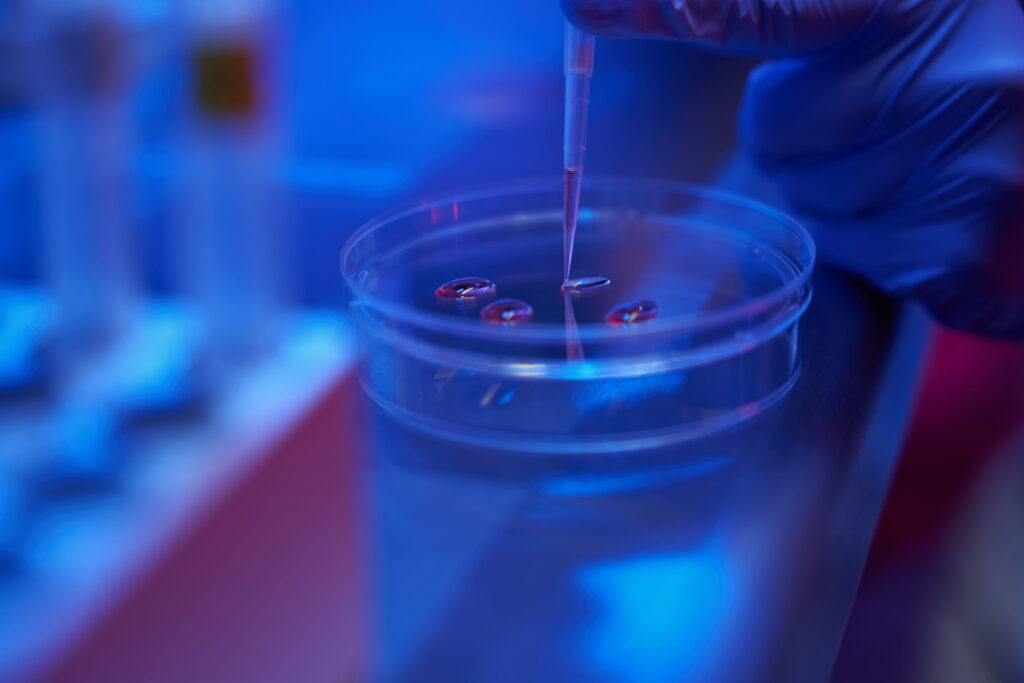
PRF supports the body’s natural healing response using the patient’s own biology. It may improve early wound healing, soft tissue maturation, graft handling, clot stability, and patient comfort after surgical procedures.
Platelet-Derived Growth Factor, or PDGF, is a biologic growth factor used to support regeneration and healing in periodontal and implant-related procedures. It helps signal cells involved in tissue repair, blood vessel formation, bone regeneration, and wound healing.
PDGF may be used with bone grafting materials, periodontal regenerative procedures, implant site development, ridge augmentation, soft tissue procedures, and selected reconstructive cases. It works by attracting and stimulating cells that are essential for healing and regeneration.
When combined with appropriate surgical technique and regenerative materials, PDGF can help create a more favorable environment for tissue repair and new bone formation.
PDGF can support more predictable healing in selected periodontal and implant procedures. It may enhance bone regeneration, improve wound healing, support tissue repair, and contribute to better regenerative outcomes when used in properly diagnosed cases.
Bone Morphogenetic Protein, or BMP, is an advanced biologic material used to support bone formation in selected regenerative and reconstructive dental procedures. BMP signals the body to recruit cells that can help form new bone in areas where bone volume has been lost or is insufficient.
BMP may be used in complex bone regeneration procedures, implant site development, ridge augmentation, sinus augmentation, and reconstruction of bony defects. It is typically combined with a carrier material and placed in the area where bone growth is needed.
Because BMP is a powerful biologic material, its use requires careful diagnosis, case selection, surgical planning, and post-operative monitoring.
BMP may help support bone regeneration in advanced or complex cases where additional bone volume is needed for implant stability, reconstruction, or long-term oral function.
Enamel Matrix Derivative, often known as EMD, is a biologic regenerative material used in periodontal therapy to support the regeneration of tissues that help anchor natural teeth. It is commonly used in selected periodontal defects where the goal is to rebuild lost support rather than simply repair the area.
After the periodontal defect is carefully cleaned and prepared, EMD is applied to the root surface or regenerative site. It helps mimic biologic processes involved in tooth development and periodontal attachment formation.
Depending on the case, EMD may be used alone or combined with bone grafting materials, membranes, or other regenerative techniques to support healing around natural teeth.
Enamel Matrix Derivative may help support the regeneration of periodontal ligament, cementum, bone, and soft tissue attachment in selected cases. It can improve healing potential and support more biologically based periodontal regeneration.
Systemic health refers to the overall health of the body and how it may influence, or be influenced by, periodontal health. The mouth is not separate from the rest of the body. Inflammation, immune function, medical conditions, medications, aging, bone health, and healing capacity can all affect periodontal disease risk, implant health, surgical planning, and recovery.
At New York Periodontics, systemic health is considered during diagnosis, treatment planning, surgery, maintenance, and long-term care. The team reviews medical history, medications, inflammation levels, healing risk, immune status, bone-related conditions, and other systemic factors that may affect periodontal and implant outcomes.
This broader perspective allows periodontal treatment to be planned more safely, precisely, and individually.
Considering systemic health helps support safer treatment planning, improved healing, better inflammation control, and more personalized periodontal care. It also helps patients understand how oral health, chronic inflammation, and overall wellness are connected.
At New York Periodontics, advanced healing is not based on a single material or procedure. It is a comprehensive philosophy that combines prevention, diagnosis, surgical precision, biologic materials, regenerative science, and long-term periodontal maintenance.
By selecting the right approach for each patient, we aim to support healthier healing, protect natural teeth and implants, improve tissue stability, and promote long-term oral and systemic wellness.